Becoming Range
Introduction
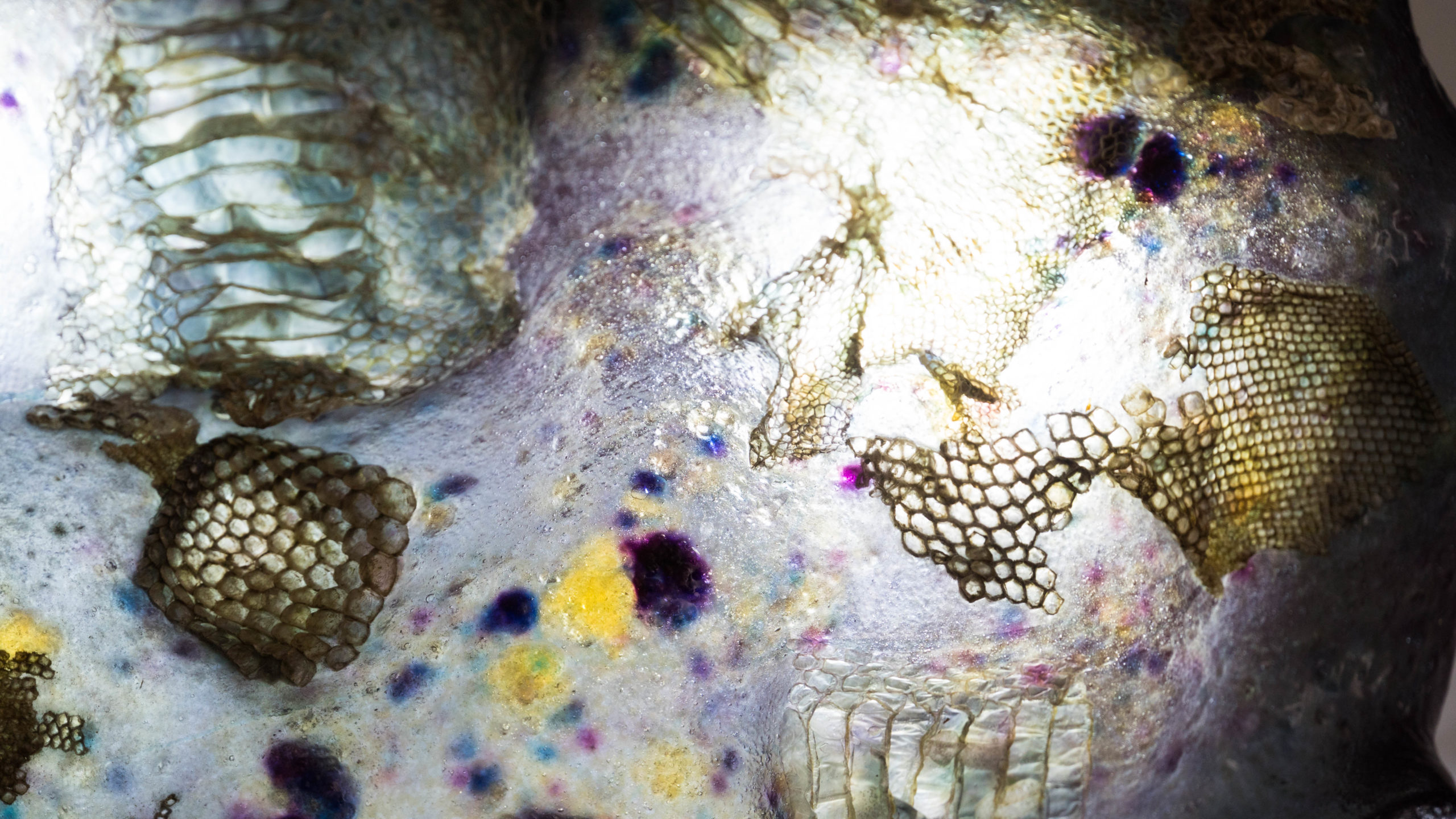
This work is a visual record of my journey to become the woman I want to be. Just like the much maligned snake, I wish to metaphorically shed my skin, leaving behind all the negatives of an uninspiring life and a lack self-confidence. I will seek out new opportunities, be curious and embrace change. I find the snake’s process
of ecdysis fascinating because as it sloughs off its old skin, simultaneously removing parasites and diseased or damaged skin. It is for this reason that I adopt snakeskin as metaphor for personal change. In my present position of liminality, shed snakeskin features as a theme throughout my print, photographic and bio-art projects.
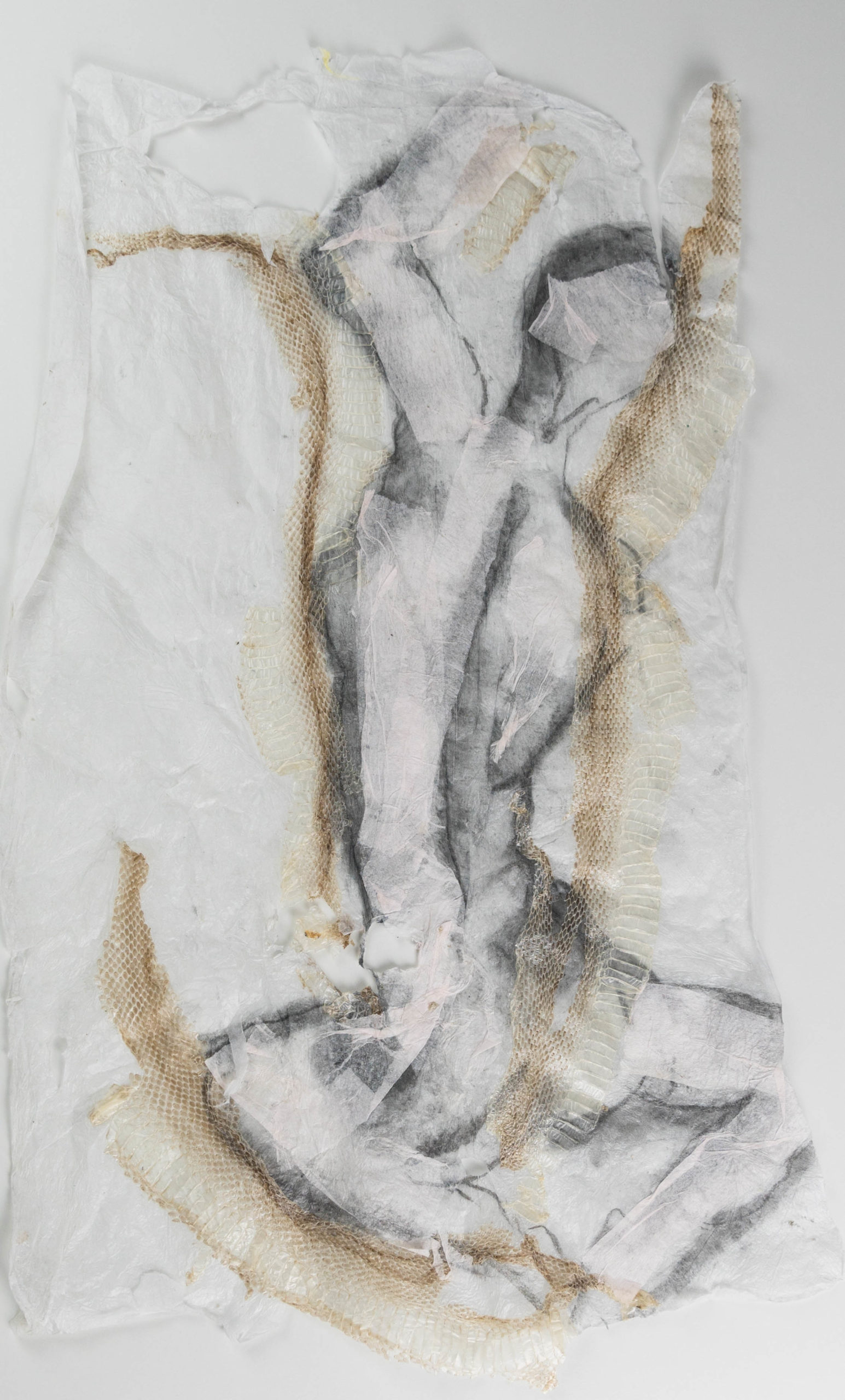
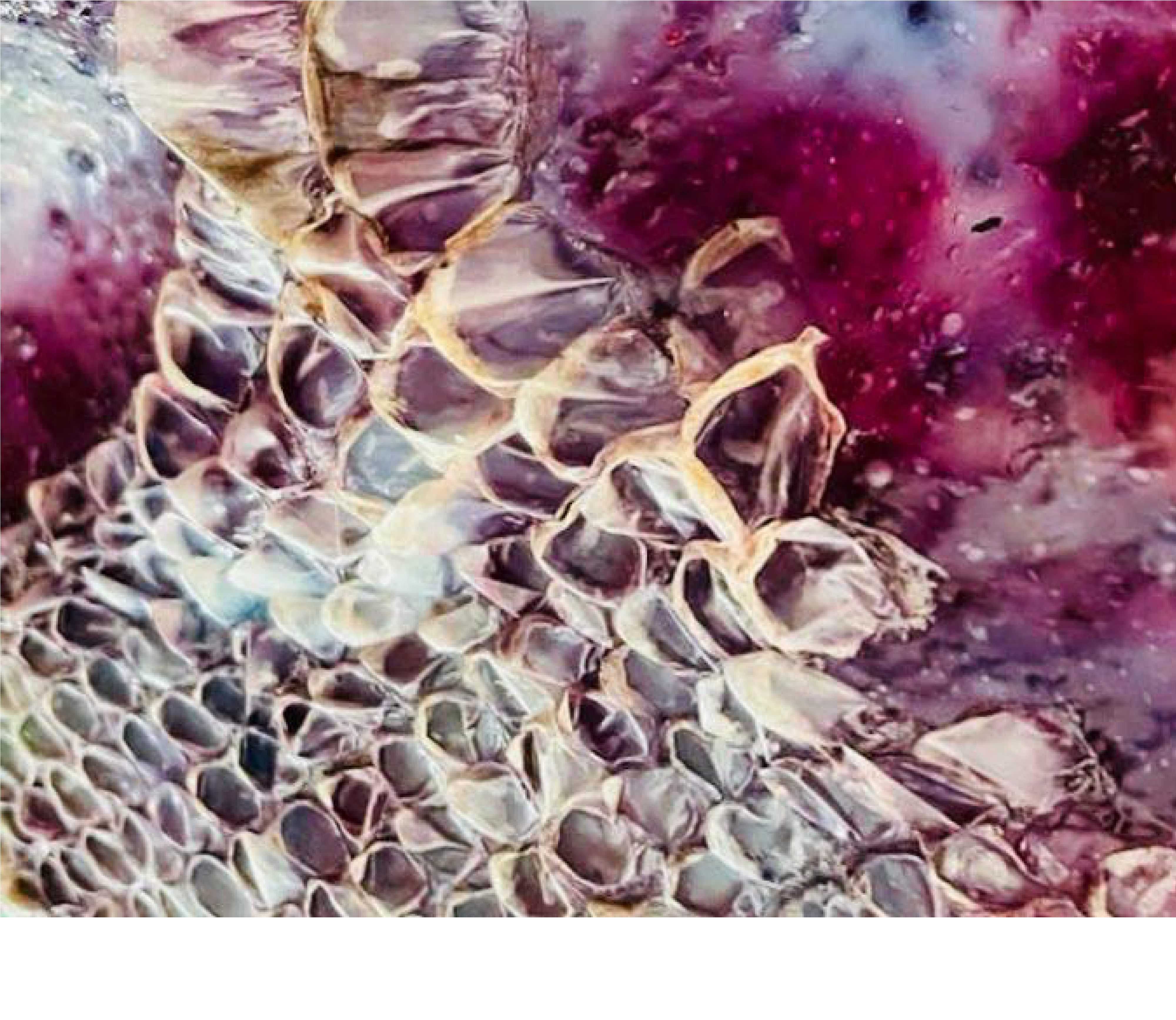
My artworks include experimentation with snakeskin, rice paper, chine collé and charcoal. Bio-art enables the creation of skin textures that translate into fragile
yet playful works. I believe that my intimate journey of ‘becoming’ offers an intimate view of my progress as an artist and a person.

Background
I am by nature a cautious person who procrastinates and automatically sees the negative in a situation. When I identified my family’s generational legacy of negativity, it made me realise that I had to make the change.
Our generational legacy is a poisoned chalice that is endlessly passed from one family member to other. For example, I used to be resentful in advance of having to clean up after a family gathering. In future, I will make a conscious effort to be grateful for ‘belonging’ in my family – and to see the creative possibilities of the
detritus left after these family festivities.
My process of ‘becoming’ involves renouncing loneliness, procrastination and self-doubt. Instead, I will embrace positive behaviours and decisions and enjoy living my life. In the meantime, I am aware of my past but have not yet reached the transition of where I wish to be:
I am in a liminal space between the two states.

Theoretical framework
Occupational scientist Ann Wilcock (2002) states that ‘doing’, ‘being’,
‘becoming’ and ‘belonging’ are crucial to self-actualisation. My transformative process involves ‘doing’ by shedding the negativity, ‘being’ by
mindfully experiencing this personal, transformative process. By ‘becoming’
the woman I aspire to be, I will reach the sense of ‘belonging’, or selffulfilment. In the interim, I am in a state of in-between: a liminal space that is neither my past nor the place/person I wish to be.
Alan Seale (2016) cites 17th century philosopher and mathematician, Blaise Pascal: somewhere, something incredible is waiting to be known. The word ‘liminal’ originates from the Latin word limen, meaning threshold. The liminal space is the space of transition between what was and what will be. It is a place of reflection of one’s inner fears, one’s strengths and vulnerabilities, and successes and disappointments. Liminality causes us to question our
beliefs, practices and identities by jolting us out of our regulated routine lives. It provokes what we know instinctively and can generate anxiety because we are not in control of what will occur, or when (Seale 2016).
I believe that my work reflects this situation. Tentative experiments with
figurative drawings develop into fully abstracted skin sculptures. Professor
Hermine Feinstein (1985:29) describes the art making process as a cognitive
thinking process to construct meaning and expand reality while the skin is
foundational to a person’s identity, body image and ego (Warwick & Cavallaro, 1998:31). Inspired by the snakeskin and my journey of becoming, I used elements of bio-art to create different skin textures. Bio-art is a practice that incorporates the biological sciences into the visual arts (Anker 2010 [sp]).
Suzanne Anker (2014:2) writes that bioart “questions the limits of the human
body and its remaking and explores the implications of altering nature”.
She explains that there are three main genres in bio-art: firstly, artists who
include the iconography of life-forms and living matter; secondly, artists who
make use of software to investigate biological sciences such as evolution
of artificial life, and thirdly, artists who use biological matter as part of their medium and process (Anker 2010 [sp]).
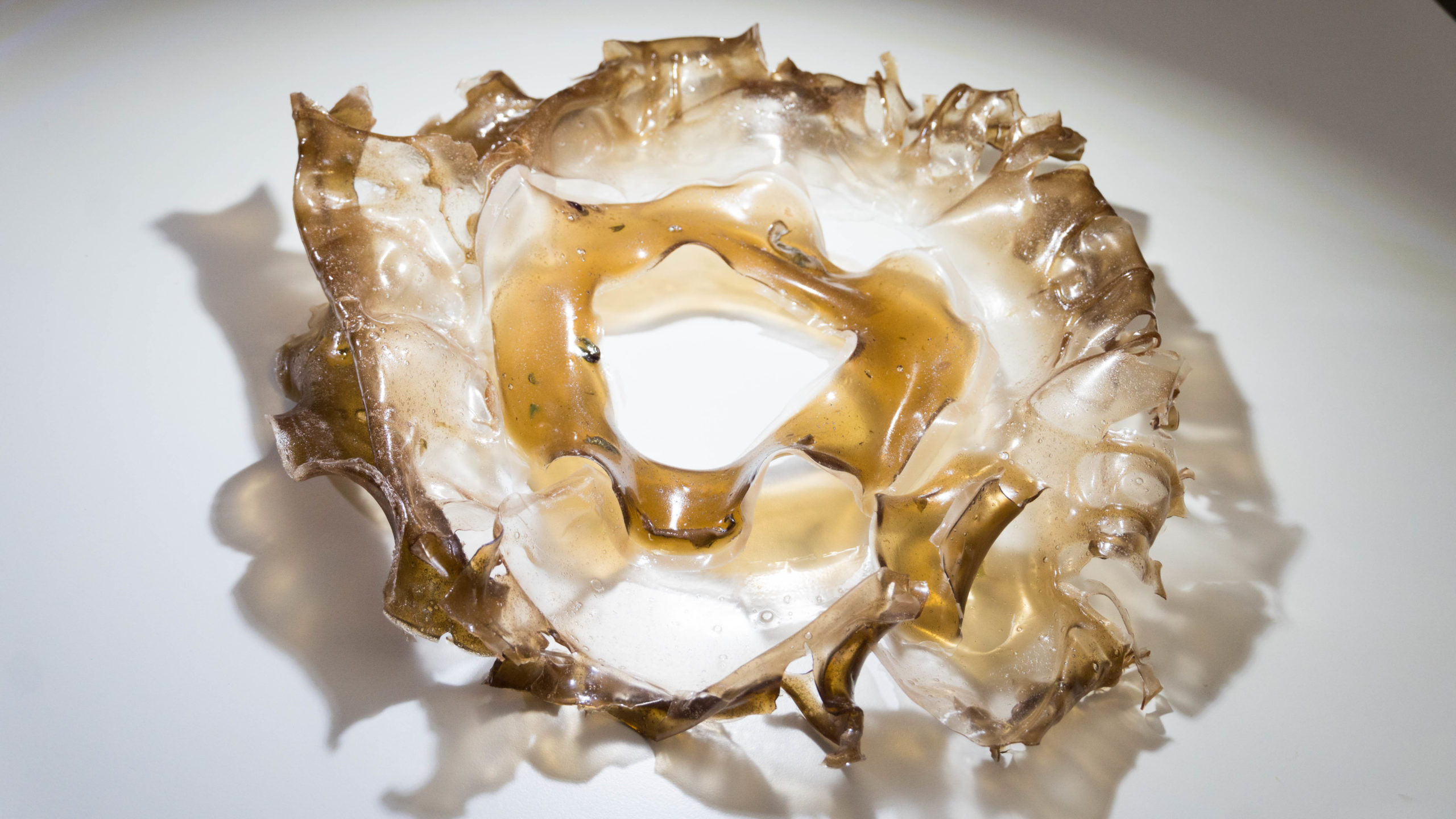
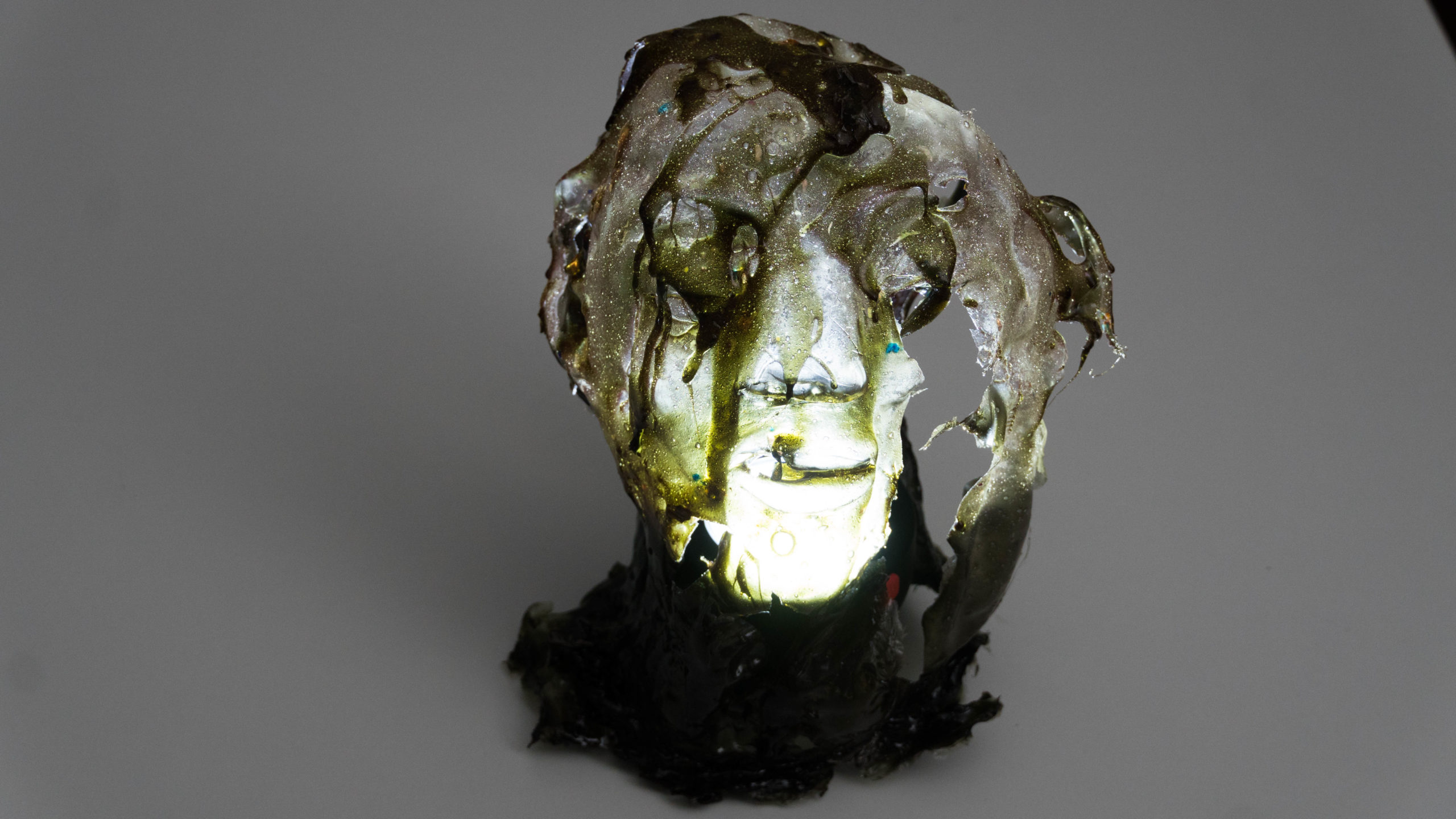
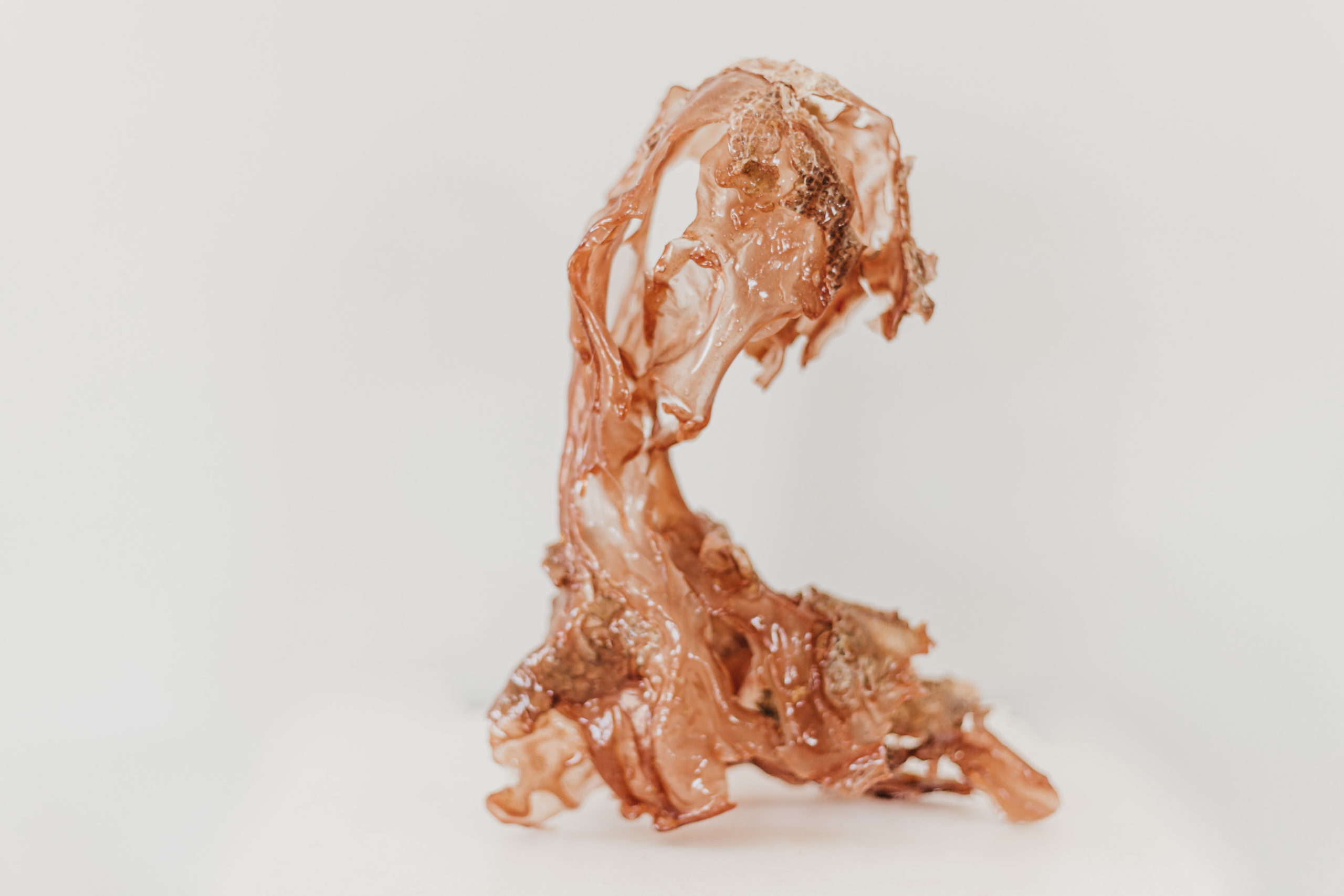
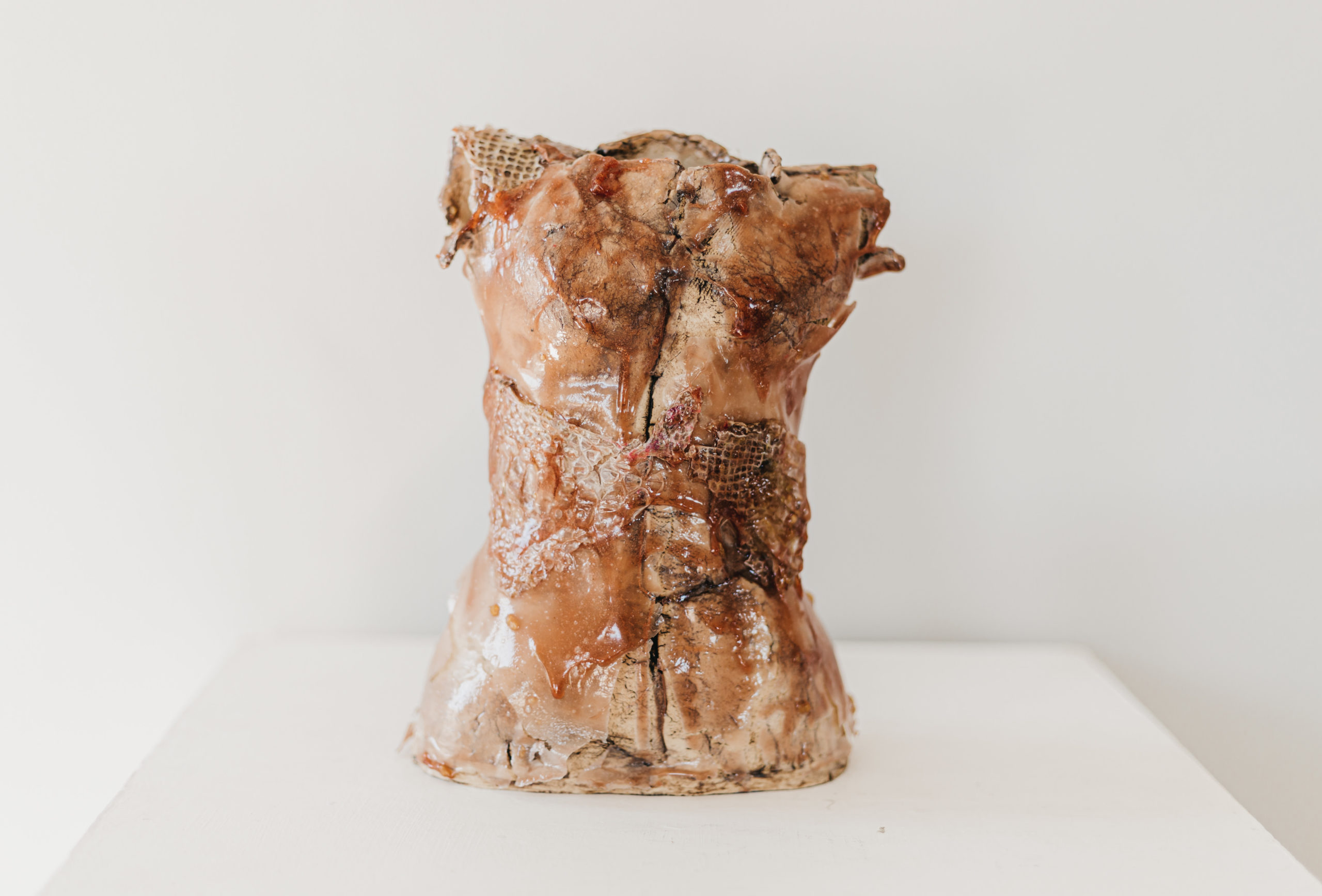
I use gelatine, commonly used in the kitchen, to allude to self-transformation
through the new, and to the residual traces remaining after large family gatherings.
ARTIST RESEARCH
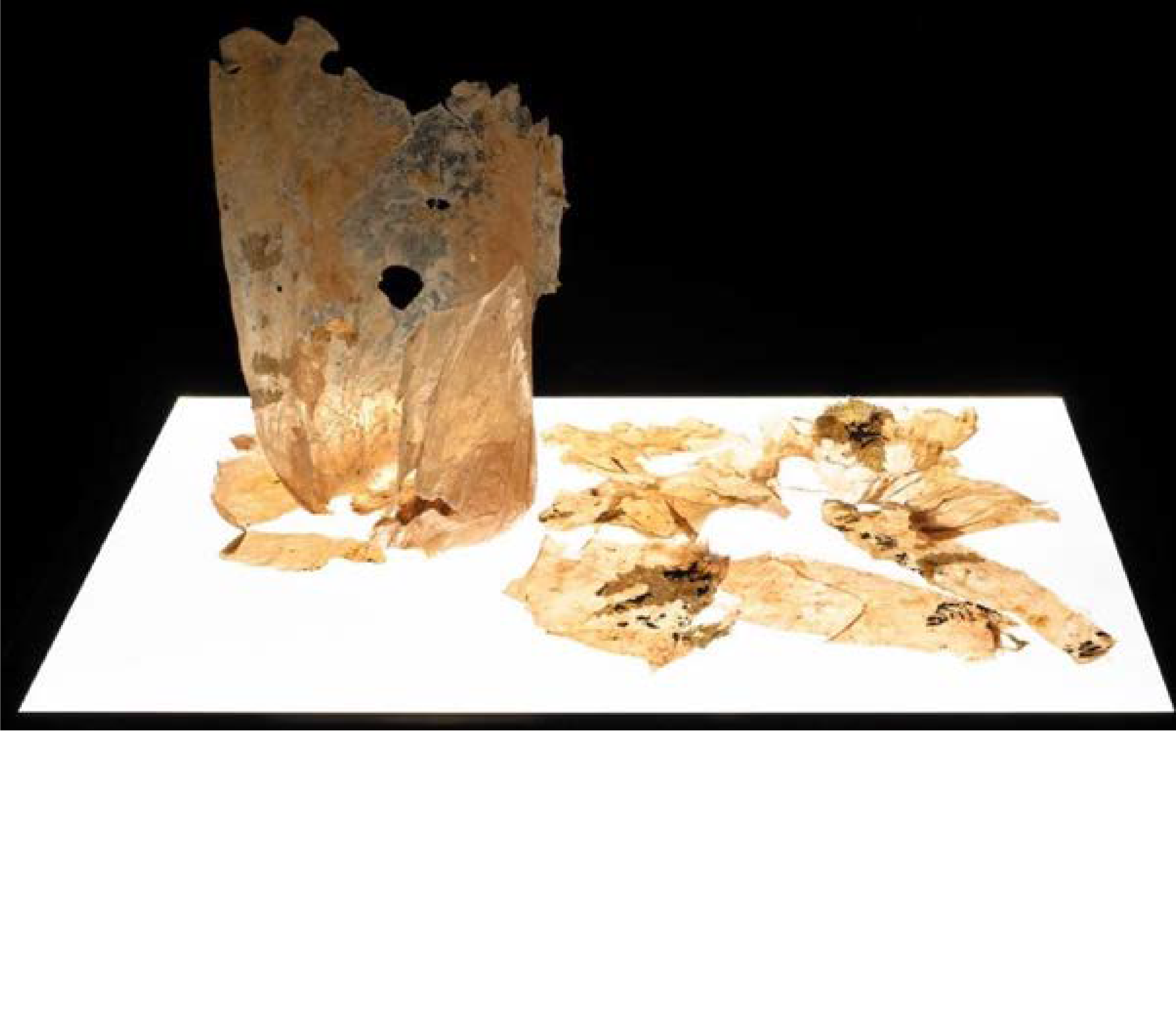
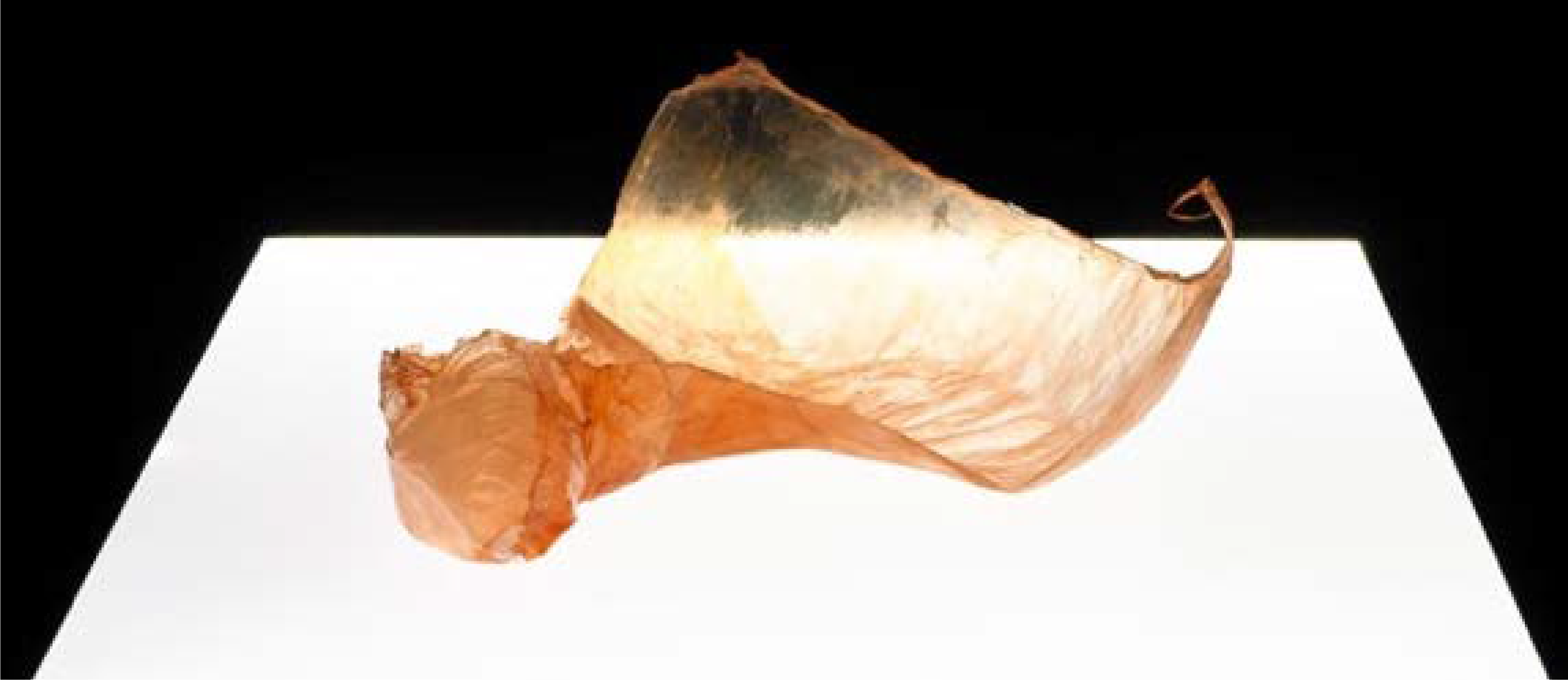
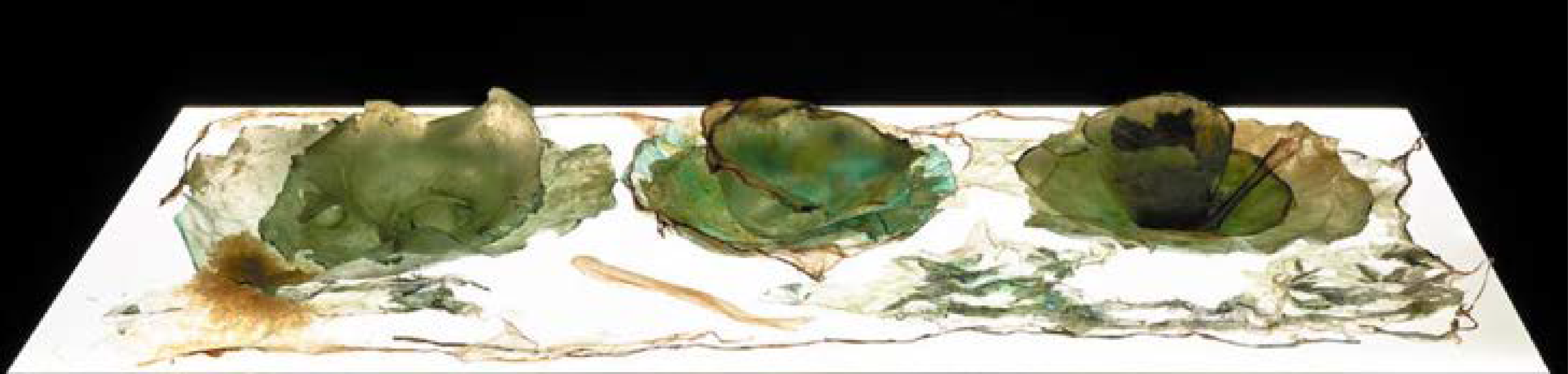
According to Leora Farber1, her focus is the body, skin, embodiment, cultural displacement and abjection through an ongoing bio-art project using cellulose fibre to create casts of domestic objects. She states that these hauntingly spectral works exist between the visible and the invisible, past and present, presence and absence, and between reality and imagination. Her 2020 installation, Intimate presences/affective absences (or, the snake within) involves bio-art. Albeit conceptually different, I am intrigued by the organic materials and processes in her work. Ashraf Jamal (2020) states that Farber’s bio-art engenders feelings of vulnerability and bravery; strangeness, discomfort and opportunity, and represents sloughing off what is no longer needed. Whereas I use glycerine and gelatine to create my works, she creates cellulose-fibre from the symbiotic action of the bacteria, Gluconacetobacter Xylinus and yeast. According to Farber (2020), the dehydrated cellulose fibre resembles traces of shed or discarded human skin (see figure 1). The second image (figure 2) resembles strange, translucent organic crockery, more delicate than the finest porcelain, and reminds me once again of my large family gatherings of the past, present and the future.
The third image of Farber’s work from Intimate presences/affective absences (or, the snake within) (2020) resembles a nacreous snail shell that has been
discarded, once again alluding to leaving behind what is no longer needed.
1 Professor Leora Farber is the director of Visual Identities in Art and Design Research Centre, Faculty of Art, Design and Architecture at the University of Johannesburg (https://www.leorafarber.co.za/bio).
Creative Methodology
In an attempt to grow a new skin, I experimented with various techniques
and processes. My technique and process involve printing and bioart.
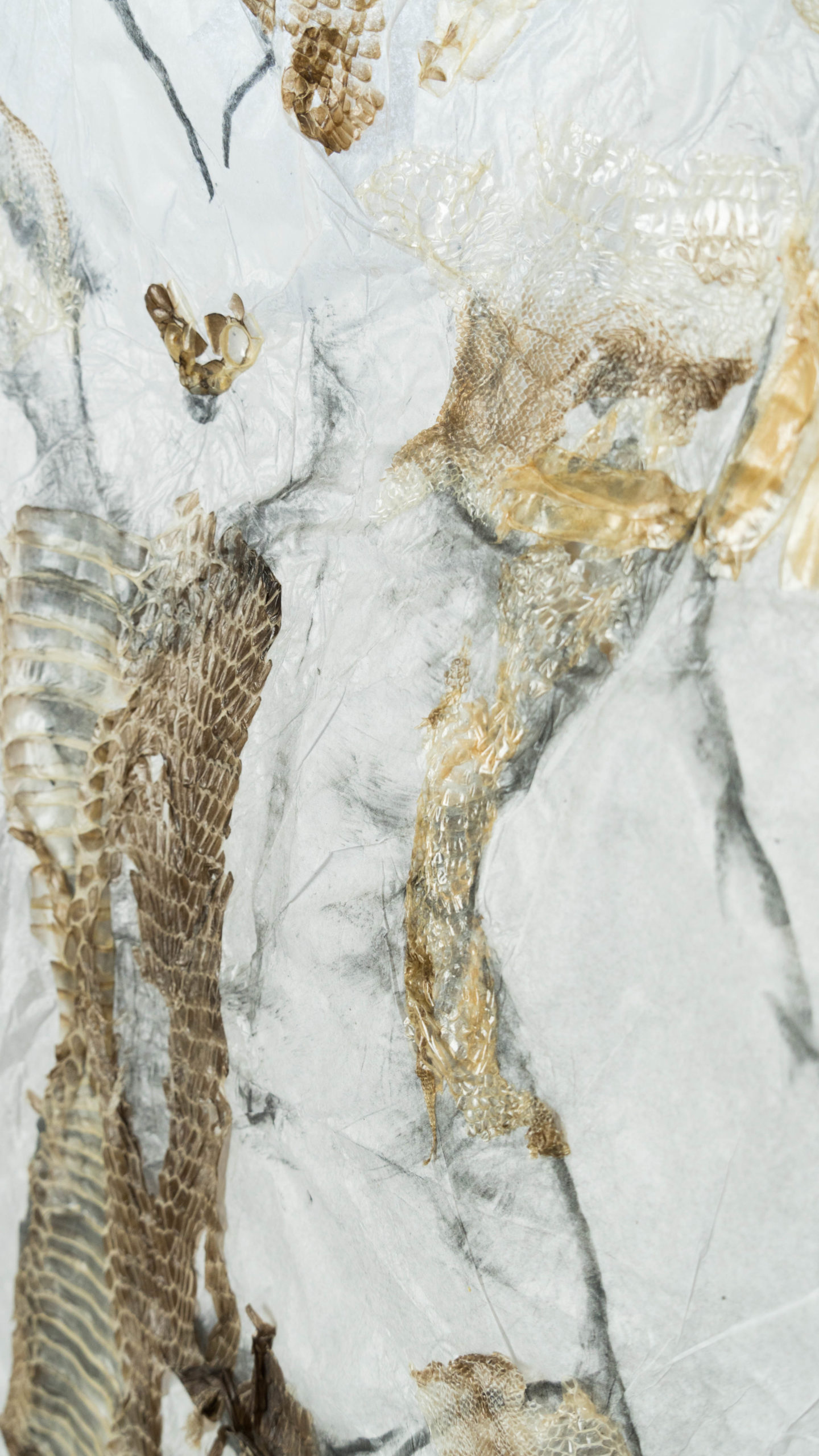
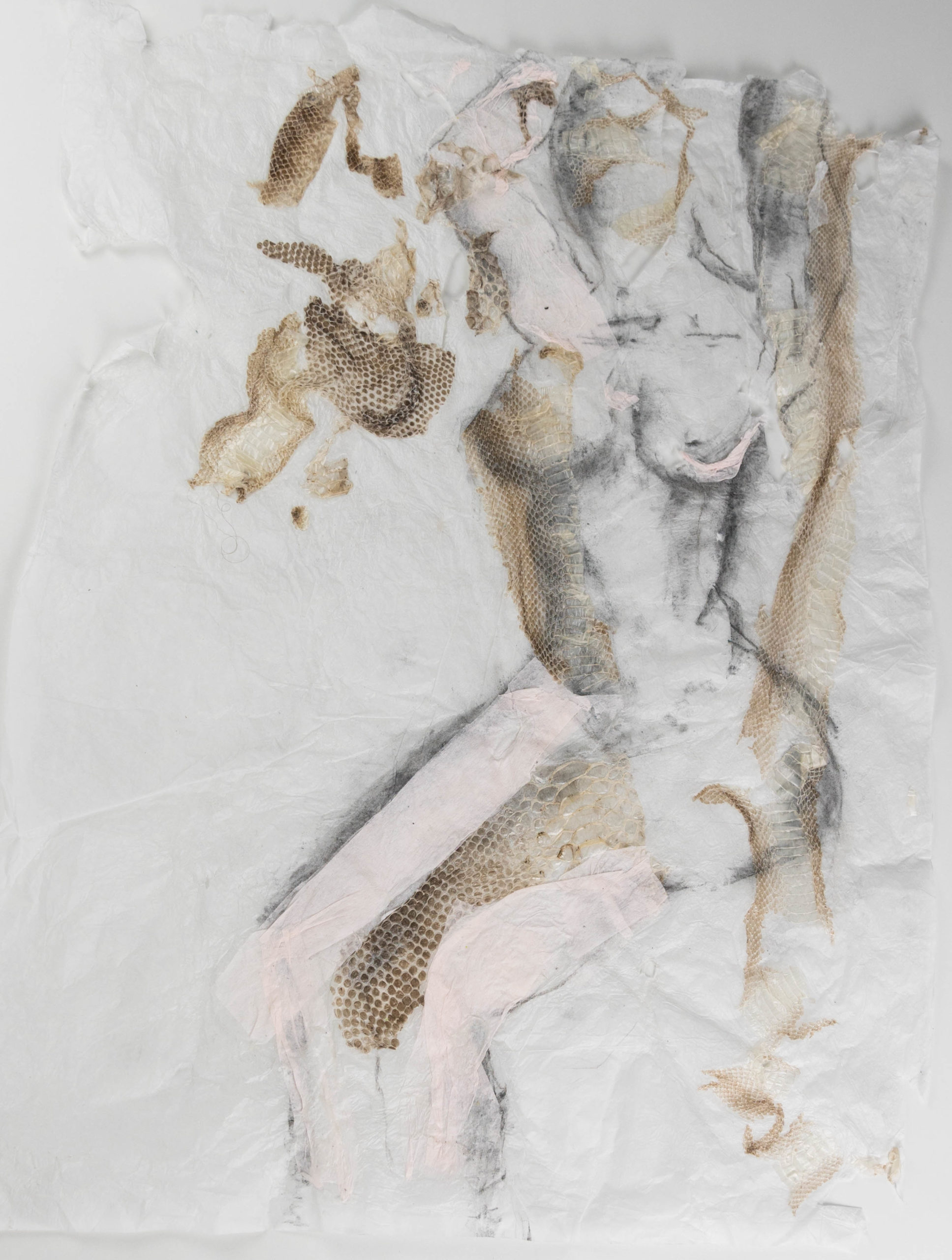
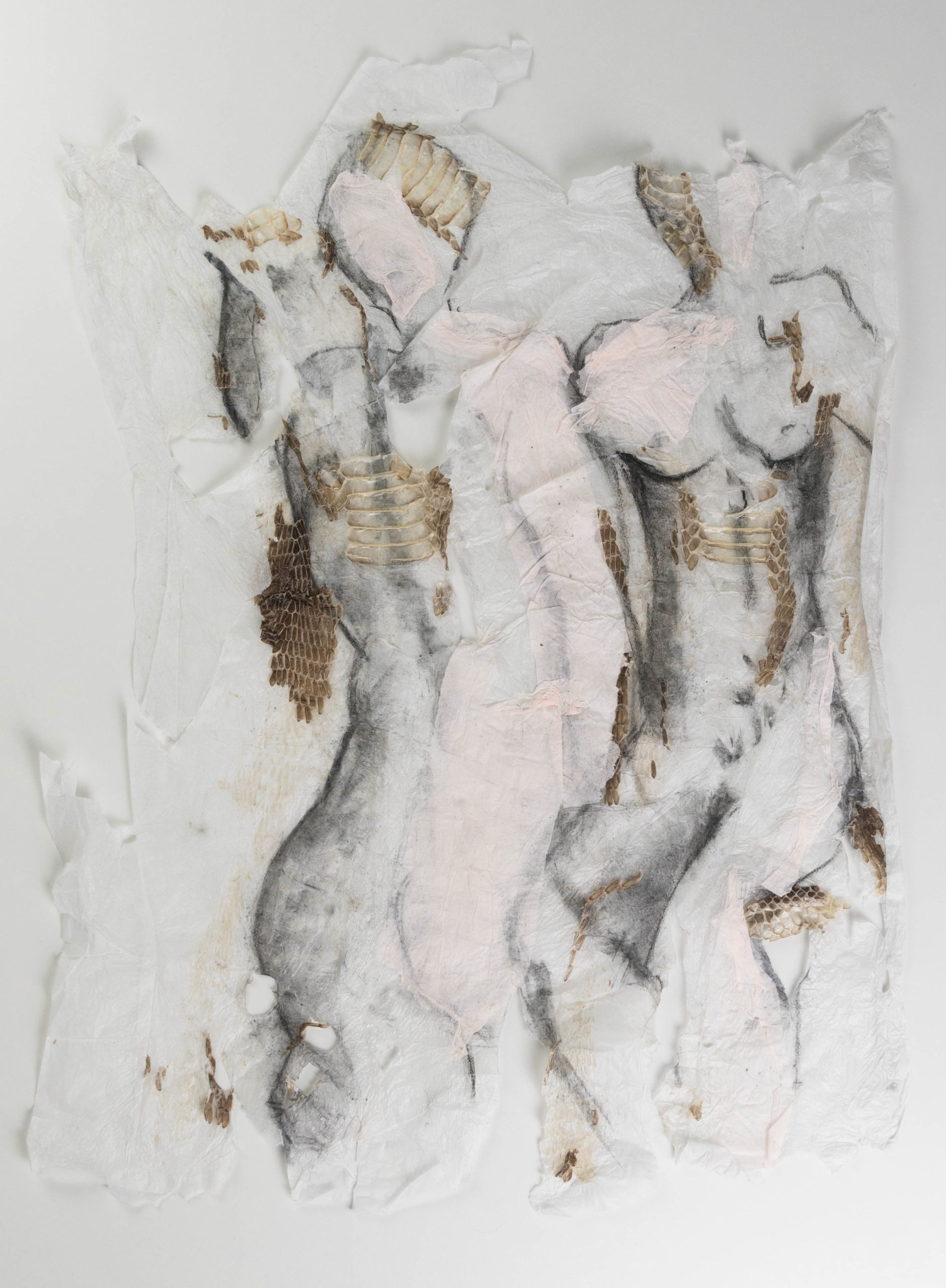
I use the chine-collé method of printing, to create a representation of
the shedding process. The printing technique transforms the paper so
it resembles human skin. I press the snakeskin sheddings on delicate
rice paper. This is combined with translucent tissue paper to create
a flesh tone and figurative charcoal sketches. The naked female charcoal
drawings reflect my vulnerability as a wife, mother and grandmother,
when I am left with the residue of the festivities after everyone has left. The
glue, handling the flimsy paper and the printing method leave blemishes
and cuts, representative of leaving my negative mindset behind.
I experiment with drypoint and monoprinting on glass and Perspex,
using Gum Arabic, water colours and ink. Ghostly images on the prints allude to liminality and transformation.
CONCLUSION
My work is an exploration, through art, of leaving a negative past behind and embracing a happier, more positive future, fully aware that I am still in a liminal space. I commenced by using figurative drawings, stitching and printing in more controlled works with a predictable outcome. The use of snakeskin sheddings and experimental bio-art processes have created
whimsical pieces that reflect my inner transformation-in-progress.